Unit Q, Dodd Lane, Dodd Lane Industrial Estate, Chorley Rd, Westhoughton, BL5 3NA

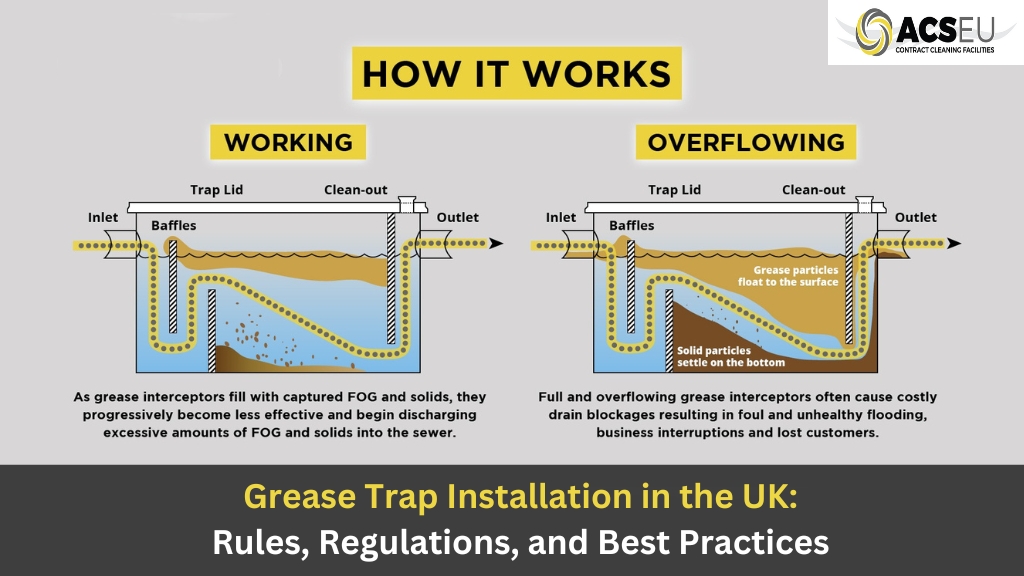
For any commercial kitchen, managing fats, oils, and grease (FOG) is not optional; it’s a legal and operational necessity. Whether you run a busy restaurant, café, or takeaway, effective grease trap cleaning services play a vital role in keeping kitchens compliant, hygienic, and running smoothly. At ACSEU Limited, businesses across the UK can access expert support for grease trap cleaning UK, maintenance, and installation tailored to their needs.
What Is a Grease Trap and Why Does It Matter?
A grease trap is a plumbing device that intercepts FOG before it enters the drainage system. Without one, grease quickly solidifies in pipes, leading to severe blockages, foul odours, and costly repairs.
Moreover, the impact extends beyond individual businesses. Across the UK, hundreds of thousands of sewer blockages each year link directly to FOG waste, contributing to flooding and environmental damage.
As a result, grease traps are essential for commercial kitchens, not only for practicality but also for environmental responsibility and legal compliance.
UK Regulations and Compliance
In the UK, several regulations govern grease management. For example, Building Regulations (Part H) require commercial kitchens to install a grease separator that complies with BS EN 1825 standards.
In addition, laws such as the Environmental Protection Act 1990 and the Food Safety Act 1990 require businesses to manage waste responsibly and prevent contamination of drainage systems.
If businesses fail to comply, they may face fines, enforcement action, or even closure. Therefore, grease trap maintenance in the UK is not just best practice; it’s a legal obligation.
The Importance of Regular Grease Trap Cleaning
Routine restaurant grease trap cleaning ensures your system operates efficiently and helps you avoid costly disruptions. Without regular cleaning, FOG accumulates and eventually bypasses the system, which causes blockages and hygiene issues.
Common signs your grease trap needs cleaning include:
- Slow drainage
- Strong, unpleasant odours
- Increased pest activity
- Visible grease build-up
If left unchecked, these issues can escalate quickly. Consequently, they can affect both your kitchen operations and overall customer experience.
How Often Should Grease Traps Be Cleaned?
The frequency of cleaning depends on the size of the trap and the volume of kitchen activity. However, general UK guidance suggests:
- Every 1–3 months for most commercial kitchens
- At least monthly for high-volume operations
- More frequent checks for smaller, under-sink units
In addition, many professionals follow the “25% rule.” Once grease and solids fill a quarter of the trap, it should be cleaned.
By working with professional grease trap cleaning services, you can ensure the schedule suits your specific business needs.
What’s Involved in Professional Grease Trap Cleaning?
Professional cleaning goes far beyond a simple rinse. Instead, a thorough service typically includes:
- Removal of all FOG and wastewater
- Clearing food debris from the base of the trap
- Cleaning internal components such as baffles and filters
- Safe and compliant waste disposal
- Documentation for Environmental Health inspections
This comprehensive approach ensures compliance while also reducing potential health risks.
The Role of Grease Trap Maintenance
Alongside cleaning, ongoing grease trap maintenance in the UK plays an equally important role. Regular inspections allow you to identify issues early, such as damaged components or reduced efficiency.
As a result, preventive maintenance can:
- Extend the lifespan of your system
- Reduce the risk of unexpected breakdowns
- Ensure consistent compliance with regulations
- Minimise costly emergency repairs
Businesses that invest in scheduled maintenance contracts often experience fewer disruptions and improved operational efficiency.
Grease Trap Installation in the UK
If you are setting up a new kitchen or upgrading your current system, proper grease trap installation in the UK is critical. You must carefully select the size, type, and location of your grease trap based on your kitchen’s output and layout.
Professional installation ensures:
- Compliance with UK Building Regulations
- Correct sizing for your business needs
- Optimal positioning for efficiency
- Long-term reliability
ACSEU Limited provides tailored installation solutions, ensuring your system remains fully compliant from day one.
Why Choose Professional Grease Trap Cleaning Services?
Although smaller grease traps may allow for basic in-house cleaning, most commercial systems require specialist equipment and licensed waste disposal. Attempting to manage this without professional support can lead to compliance issues and health risks.
By working with experienced providers like ACSEU Limited, businesses benefit from:
- Reliable, scheduled servicing
- Emergency call-outs when needed
- Full compliance support
- Reduced downtime and disruption
Ultimately, professional grease trap cleaning services in the UK provide peace of mind, allowing you to focus on running your kitchen.
Final Thoughts on Grease Trap Cleaning & Maintenance UK
In summary, grease trap cleaning and maintenance are essential for any UK business operating a commercial kitchen. From legal compliance to operational efficiency, staying on top of your grease management system helps protect your business, your staff, and the wider environment.